



Updated for 2026
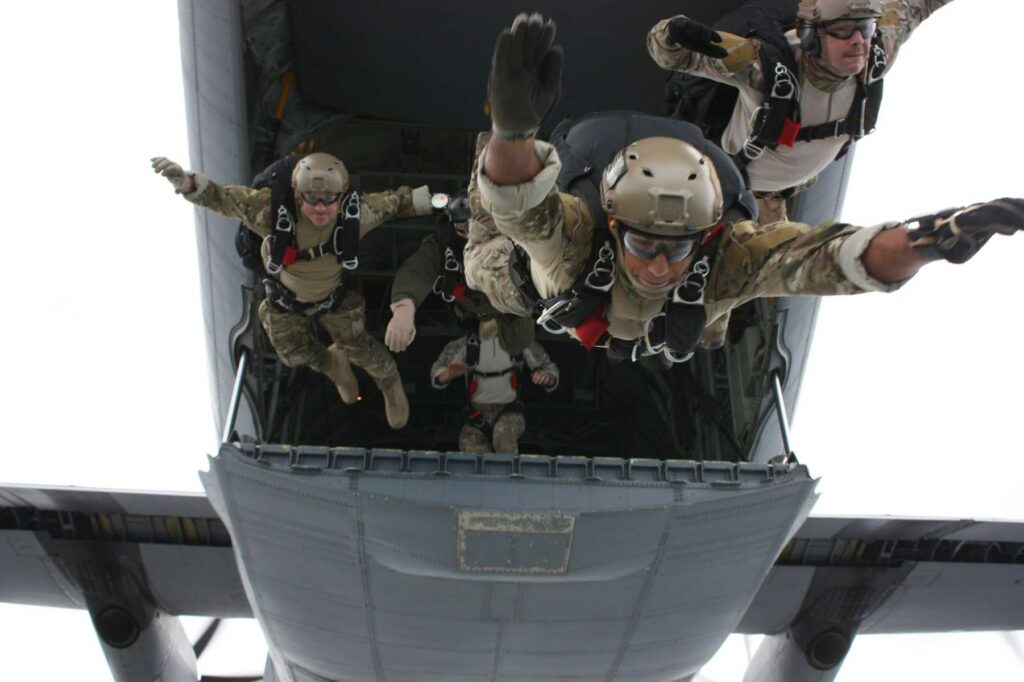
LALO (Low Altitude, Low Opening) and HAHO (High Altitude, High Opening) are military skydiving methods used for tactical operations. They differ in exit altitude and parachute deployment timing.
In sport skydiving, most civilian jumps — including those at Skydive Chicago — follow a different model.
Let’s break it down clearly.
Quick Comparison: LALO vs HAHO vs HALO
| Jump Type | Exit Altitude | Parachute Deployment | Purpose |
|---|---|---|---|
| LALO (Low Altitude, Low Opening) | Low altitude | Immediate deployment | Tactical precision landing |
| HAHO (High Altitude, High Opening) | Very high altitude (up to ~20,000 ft) | Immediate high opening | Long-distance canopy glide |
| HALO (High Altitude, Low Opening) | Very high altitude | Delayed opening (3,500–5,000 ft) | Stealth insertion / long freefall |
| Sport Skydiving | 13,000 ft (typical) | Around 5,000 ft | Recreational freefall |
What is LALO?
LALO stands for Low Altitude, Low Opening.
In military operations, this involves exiting the aircraft at a relatively low altitude and deploying the parachute immediately. The goal is:
- Fast insertion
- Precision landing
- Reduced exposure
In civilian skydiving, similar jumps are called hop-and-pops. These typically occur between 3,500 and 5,000 feet and are used for:
- Emergency procedure training
- Canopy skill practice
- License currency requirements
Freefall time is usually 5 seconds or less.
What is HAHO?
HAHO stands for High Altitude, High Opening.
These jumps involve exiting at high altitudes (often around 20,000 feet) and opening the parachute almost immediately. Jumpers then glide silently for long distances — sometimes miles — before landing.
HAHO jumps require:
- Oxygen systems
- Specialized high-altitude equipment
- Advanced navigation skills
- Extensive training
They are primarily used by military special operations units.
What Is a HALO Jump?
HALO stands for High Altitude, Low Opening.
Jumpers exit at high altitude and freefall for an extended period before deploying their parachute at lower altitudes (typically 3,500–5,000 feet).
This allows:
- Long freefall duration
- Reduced detection
- Tactical flexibility
Famous HALO jumps include:
- Col. Joseph Kittinger’s 1960 stratospheric jump
- Felix Baumgartner’s 2012 Red Bull Stratos jump
These extreme examples required highly specialized equipment and conditions not found at typical dropzones.
How Does Civilian Sport Skydiving Compare?
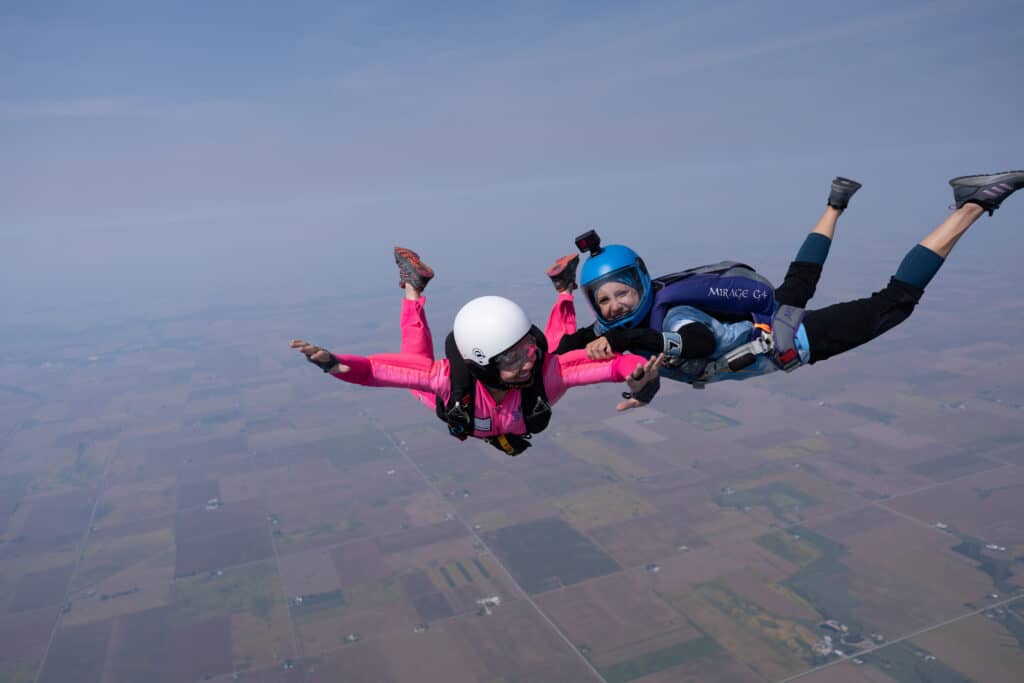
At Skydive Chicago, jumps typically exit from 13,000 feet.
This provides:
- About 60 seconds of freefall
- 5–7 minutes under canopy
- A balanced mix of thrill and safety
Sport skydiving prioritizes:
- Recreational experience
- Structured progression
- Standardized safety procedures
- USPA licensing systems
Unlike military LALO or HAHO operations, civilian skydiving is designed for enjoyment and skill development.
Whether you’re here for your first tandem, want to learn to solo skydive through our AFP program, or are participating in one of our events for licensed jumpers, our altitude gives you the perfect mix of adrenaline, freedom, and fun!
Can Civilians Do HALO or HAHO Jumps?
While technically possible in very rare and specialized circumstances, true HALO and HAHO jumps are not standard offerings at recreational dropzones.
They require:
- High-altitude aircraft capability
- FAA approvals
- Oxygen equipment
- Specialized training
Most civilian skydiving experiences focus on tandem jumps, licensing programs, and sport disciplines like freeflying or wingsuiting.
Frequently Asked Questions
LALO stands for Low Altitude, Low Opening — a jump performed at low altitude with immediate parachute deployment. Also known as a hop and pop.
HAHO stands for High Altitude, High Opening — a jump from high altitude with immediate canopy deployment.
HALO involves delayed parachute opening after a high-altitude exit, while HAHO involves immediate parachute opening after a high-altitude exit.
Not typically. Civilian sport skydiving usually involves exiting around 13,000 feet with deployment around 5,000 feet.
Experience Skydiving the Civilian Way
While military acronyms like LALO and HAHO capture the imagination, most skydivers begin with a tandem jump or a structured licensing program.
👉 Learn more about tandem skydiving
👉 Explore our Advanced Freefall Program